Thousand pillar temple
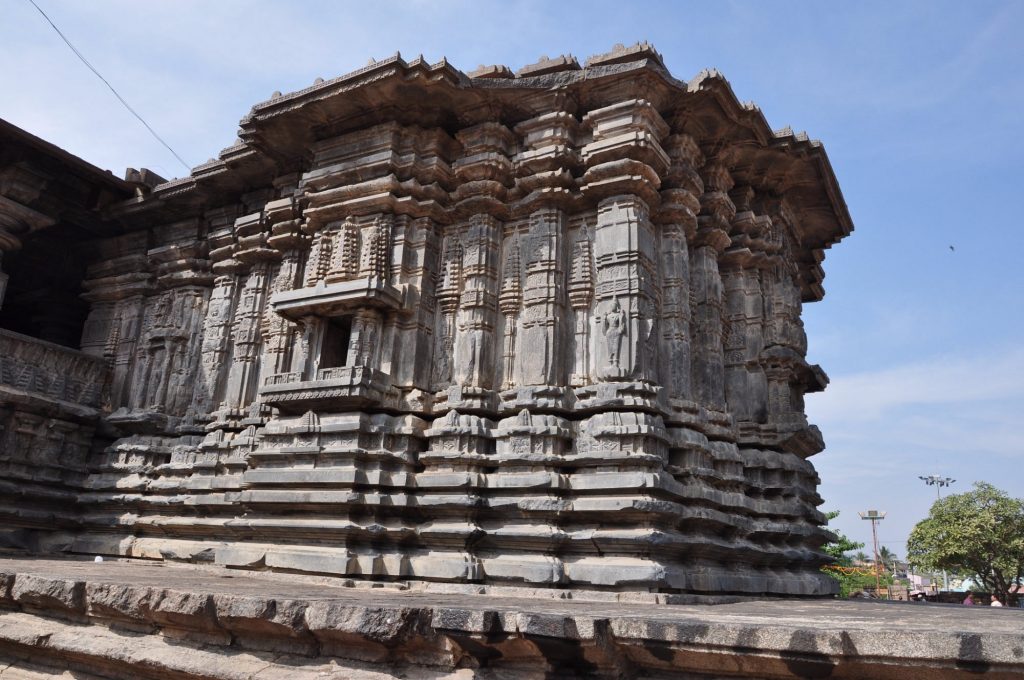
The Thousand Pillar Temple, or Sri Rudreshwara Swamy Temple, is a 12th-century masterpiece in Hanamkonda, Telangana, built in 1163 CE by the Kakatiya King Rudra Deva. It is a trikuta temple dedicated to Shiva, Vishnu, and Surya, featuring intricate carvings, 84-pillar natya-sala (dance hall), and a, though not literally 1000, large number of granite pillars.
Key Aspects of Thousand Pillar Temple History:
Construction: Built in 1163 AD by Kakatiya king Rudradeva, it showcases the pinnacle of Kakatiya architecture, which is a blend of Chalukyan style. It took, according to some reports, nearly 72 years to complete.
Deities & Structure: The temple is a Trikutalayam, dedicated to three deities: Lord Shiva, Lord Vishnu, and Lord Surya. It was constructed using, in part, Khairagarh granite stone.
Architecture & Design: The structure includes a prominent Star-shaped layout, featuring a Natya-sala (dance hall) supported by intricately carved pillars. While named “Thousand Pillar,” the total number is less, but the design is densely packed with pillars that are designed to stand for centuries.
Historical Impact & Damage: The temple suffered significant damage and desecration during the 13th century (specifically during the Tughlaq invasions), with many deities, including the main Shiva Lingam, showing signs of deliberate destruction.
Restoration: The Archaeological Survey of India (ASI) has undertaken extensive restoration efforts to repair the damaged structure and preserve its, according to some, 12th-century heritage.
Location: The temple is situated near the base of the Hanamkonda hill in the Warangal district of